A development application was lodged today with Kingborough Council for construction of the world’s first rock lobster hatchery at the Institute for Marine and Antarctic Studies (IMAS) Taroona research laboratory site.
The application was made by Ornatas Pty Ltd, a Tasmanian company that the University of Tasmania is partnering with to commercialise world-leading research that will for the first time enable tropical rock lobster production on a commercial scale.
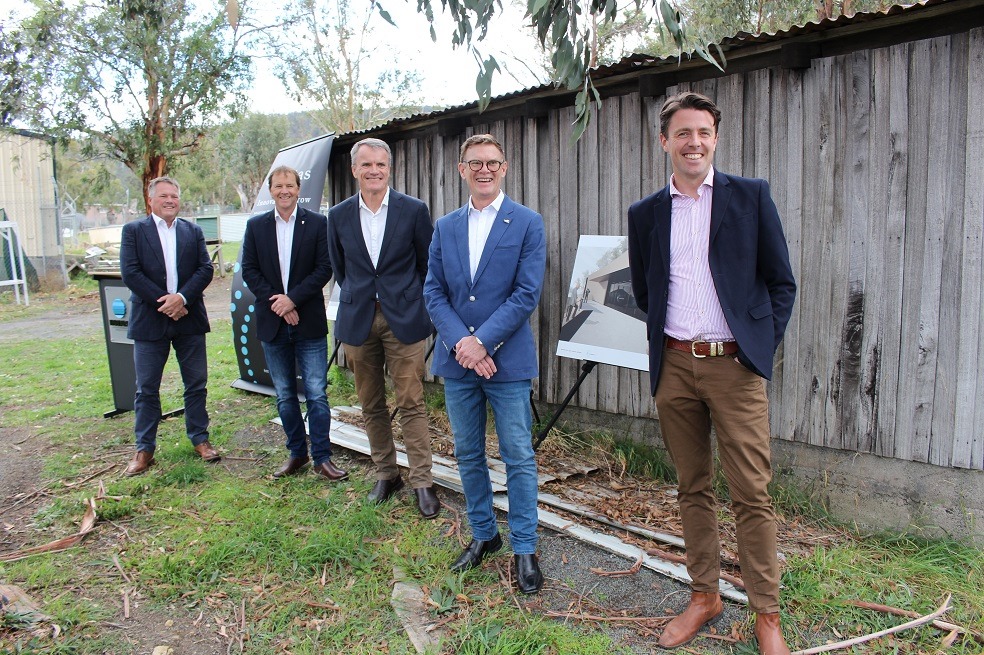
IMAS Executive Director Terry Bailey said the unique facility would allow long-running lobster research at the Nubeena Crescent site to enter its next phase.
“IMAS scientists are leading the world in research to enable rock lobster aquaculture on a commercial scale.
“The University has partnered with Ornatas to realise the potential of this exciting science, developed during almost 20 years of research at Taroona.
“Building the world’s first tropical rock lobster hatchery will raise new research questions for our scientists, as lobsters have a complex life cycle and have never been reared on this scale before,” Mr Bailey said.
“The Australian Government recently announced new funding to help address these challenges through the ARC Research Hub for Sustainable Onshore Lobster Aquaculture.
“The hatchery will include a laboratory to support this research, complementing our existing facilities on the site.
“If the DA is approved, construction of the hatchery will provide ongoing research and commercial benefits, demonstrating the practical contribution that cutting‑edge science such as this can make to the Tasmanian community and economy,” Mr Bailey said.
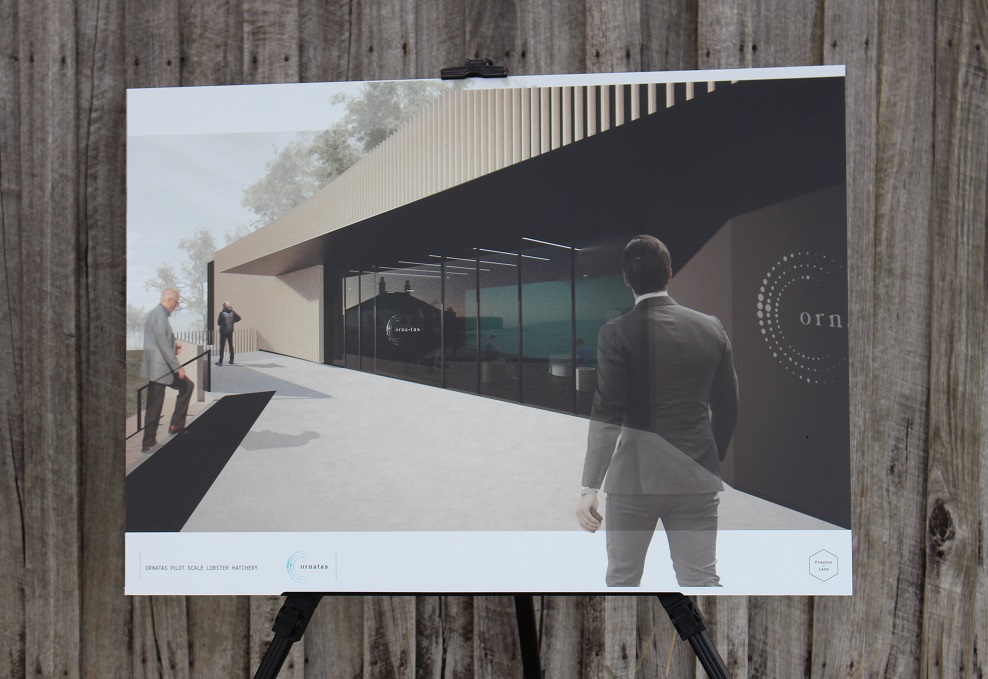
The new state-of-the-art hatchery will be a two-storey 1805m2 building, replacing existing sheds that were part of the former DPIPWE site.
The building will include a research laboratory, lobster hatchery, plant equipment space, and offices.
Wastewater will be discharged through the IMAS pump station after sterilisation, with the highest level of biosecurity to ensure no contaminants enter the river.
The tiny lobster hatchlings produced at Taroona will be grown out to marketable size at an Ornatas site near Townsville, Queensland.
In November the Tasmanian Planning Commission approved changes to the planning scheme to allow development activities on the Nubeena Crescent site associated with the research undertaken in the area.
At the request of residents, a forested part of the site adjacent to the beach has been gifted to Kingborough Council to be managed as part of the Taroona Foreshore Park.
The University of Tasmania has welcomed new Australian Government funding which will support world-leading IMAS research into lobster aquaculture.
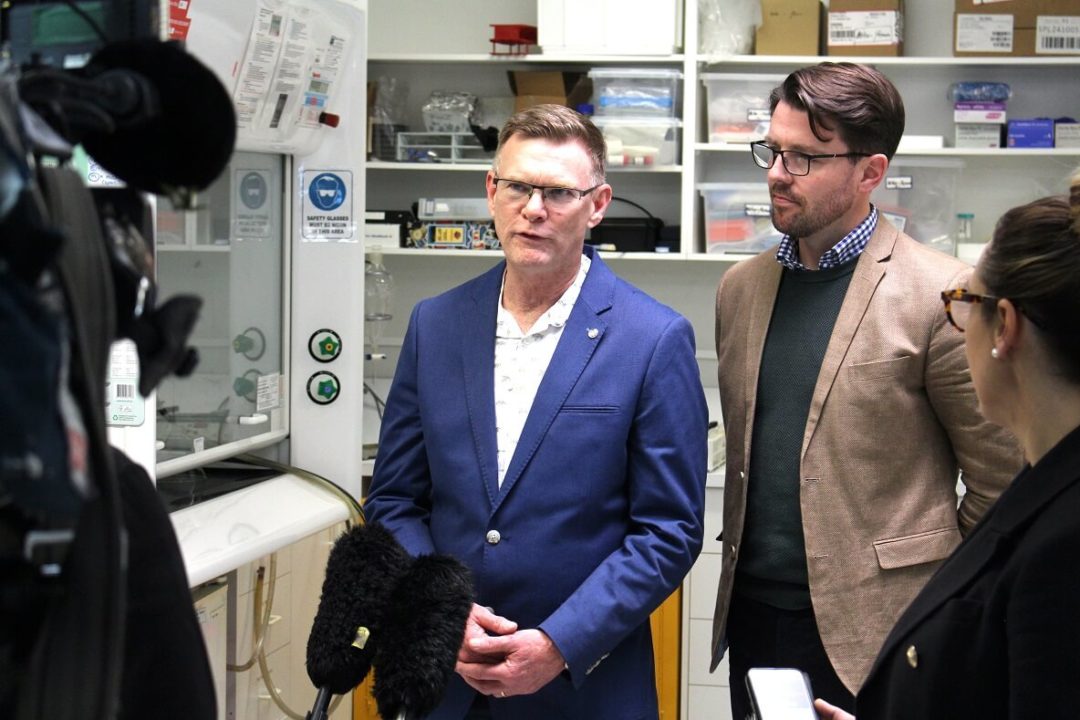
Assistant Minister for Forestry and Fisheries Senator Jonathon Duniam (pictured below, right) announced the research will receive funding of $5 million over the next five years through the Australian Research Council to will support the establishment of the world’s first sustainable onshore lobster aquaculture industry.
University of Tasmania Vice-Chancellor Professor Rufus Black said the funding will allow IMAS scientists to build on decades of research to complete the hatchery to market vision.
“This funding will support the next phase of research and help us turn an idea that Tasmanian scientists have pursued for many years into an industry that puts Australia at the cutting edge of aquaculture,” Professor Black said.
“In collaboration with government and industry, we are using our distinctive research strengths to support Tasmanian grown, globally competitive enterprises.”
Director of the ARC Research Hub for Sustainable Onshore Lobster Aquaculture Associate Professor Greg Smith (pictured above, left) said crustaceans were among the most highly prized and valuable seafood products in the world.
“We have succeeded in developing breakthrough technology to allow the mass culture of hatchery lobster seedstock – juveniles – sustainably and commercially,” Associate Professor Smith said.
“This new research aims to answer the next set of questions in the development of an onshore lobster aquaculture industry for Australia, developing aquaculture rearing systems, innovative feed and transport solutions and support industry transformation during the establishment phase of a new commercial sector.”
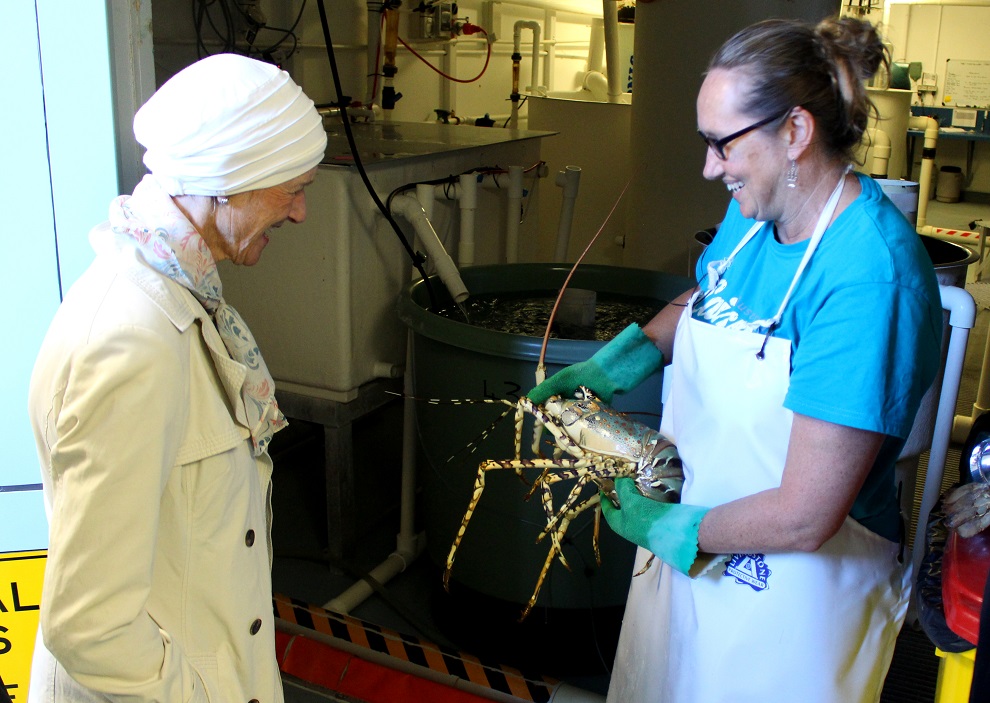
Her Excellency the Honourable Kate Warner, AC, Governor Of Tasmania and Mr Warner toured the ARC Research Hub for Commercial Development of Rock Lobster Culture Systems.
The cutting edge research into the sustainable production of tropical rock lobsters will support the establishment of the world’s first commercial hatchery.
Congratulations to the inspiring winners of this year’s Tasmanian STEM Excellence Awards.
The third annual STEM (Science, Technology, Engineering and Mathematics) awards celebrate and recognise leaders and their achievements across these core fields of study and research.
Not only is today a chance to recognise the contribution these leaders make to the community, it also inspires others by showcasing the innovative achievements being made right here in Tasmania.
This year’s winners include:
Tasmania prides itself as a notable centre of scientific excellence and as a hub of innovation flowing from the critical mass of flexible, capable scientists and the ‘can do’ community spirit for which we are recognised globally.
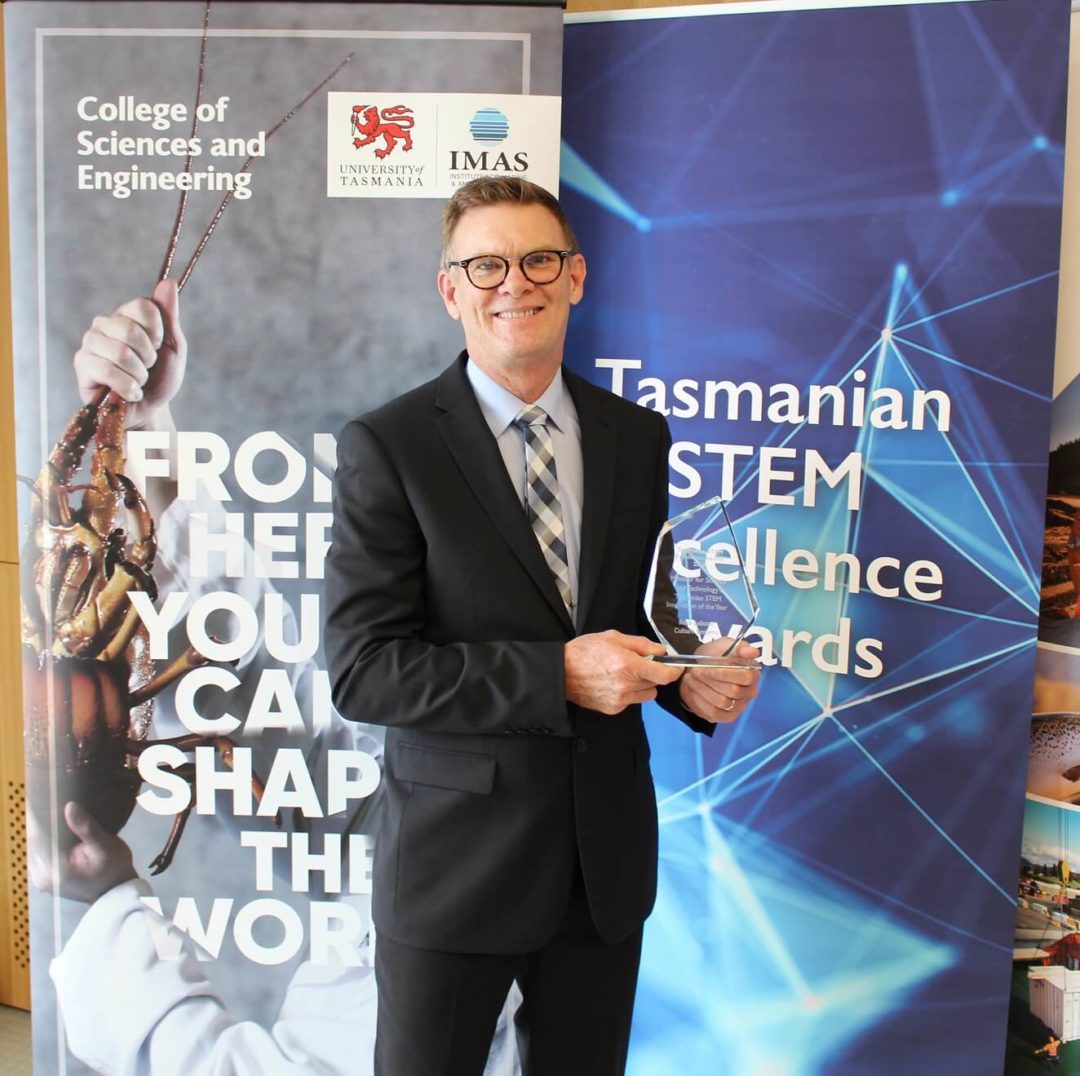
The 2018 Tasmanian STEM Awards reflect the quality and capability of our science, technology, engineering and mathematics professionals, communicators and educators – particularly their deep connection with the community and its future.
The Tasmanian STEM Awards are jointly supported by the Tasmanian Government, Inspiring Australia and the University of Tasmania.
For more information on the Tasmanian STEM Awards or winners contact Sarah Bayne at the University of Tasmania on 0419 472 539 or at [email protected]
World-leading IMAS research paving the way for the development of a lobster aquaculture industry in Tasmania has attracted more accolades for the University of Tasmania.
Based at IMAS Taroona, researchers at the ARC Research Hub for Commercial Development of Rock Lobster Culture Systems developed a unique process that allows tropical rock lobsters to be bred on a commercial scale, overcoming the challenges posed by the lobster’s long and complex lifecycle.
The University won both of the awards on offer at last week’s Knowledge Commercialisation Australasia (KCA) annual conference for work supporting the commercialisation of the innovative research.
The University’s Director of Business Development and Technology Transfer, Dr Darren Cundy (pictured above, centre, with past & present KCA Chair), was in Melbourne to accept the Research Commercialisation Award and the People's Choice Award.
“Leveraging skills from across the University, the technology transfer unit led the effort to commercialise the results of more than 17-years of lobster research,” Dr Cundy said.
“In doing so we have created the commercial framework to allow Tasmania and the State’s economy to benefit from this invaluable home grown intellectual property.
“The commercialisation process involved creating a new Australian company, issuing an exclusive Australian licence to the University, attracting $2.5 million in equity investment to sustain the ARC Research Hub and leveraging our intellectual property right to secure commercial partners.”
Dr Cundy said a sub-licence of the technology to Tasmanian based Plastic Fabrications Group (PFG) is now in place on terms that will see the world’s first commercial scale tropical rock lobster hatchery begin production in Tasmania before August 2021.
The Director of the ARC Research Hub for Commercial Development of Rock Lobster Culture Systems, Associate Professor Greg Smith, said it was exciting to see the research being turned into a commercial reality in collaboration with PFG.
“As a result of sustained collaboration between scientists, funding bodies and our industry partners, our research has reached a point where it can deliver real economic and commercial impact,” Associate Professor Smith said.
“We have demonstrated that our hatchery process can annually produce tens of thousands of juveniles suitable for stocking grow-out facilities, and we look forward to seeing the technology scaled-up further through the commercial aquaculture facility.”
The IMAS researchers who developed a world-first method to breed rock lobsters commercially have now paved the way for a Moreton Bay Bug aquaculture industry in Tasmania.
Based at IMAS’s Taroona laboratories, the ARC Research Hub for Commercial Development of Rock Lobster Culture Systems began researching hatchery techniques for the Bay Lobster, Thenus oriental, better known as Moreton Bay Bugs, in September 2017.
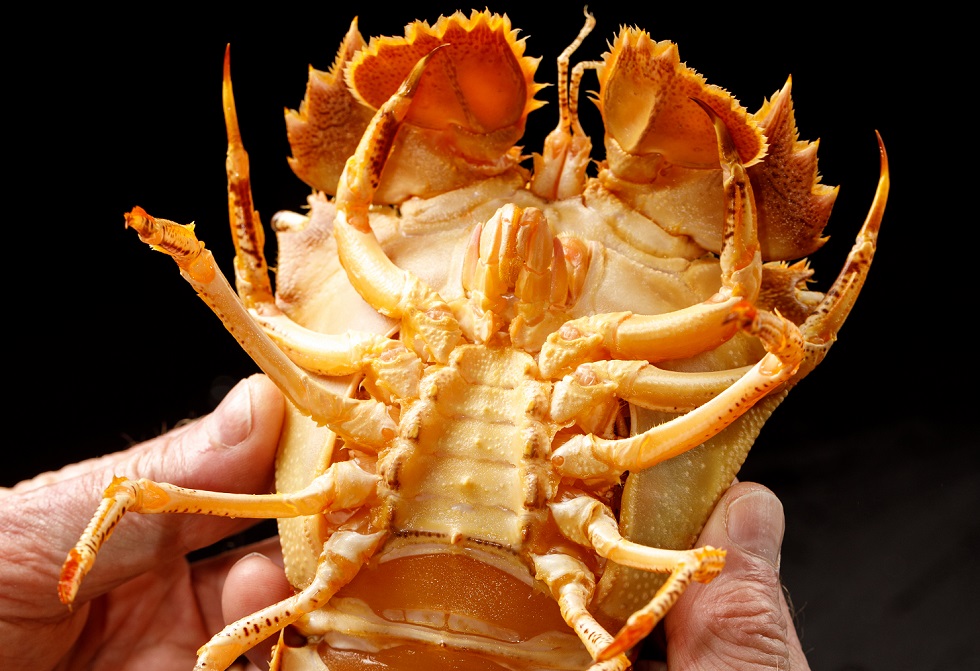
The Research Hub’s Director, Associate Professor Greg Smith, said the successful application to Bay Lobsters of the IMAS techniques developed for Tropical Rock Lobsters paved the way for a commercial operation in Tasmania.
“There are many biological similarities between the two species, particularly during the larval period, where tank design, water quality and appropriate feed are vital for lobster survival and growth,” Associate Professor Smith said.
“By applying our techniques to Bay Lobsters in recent months we have been able to successfully rear thousands of juvenile bay lobsters.
“Some of these animals have been selected as breeding stock and their offspring will be grown in the hatchery later this year.
“Bay Lobsters have shown strong potential for development as a commercial aquaculture species, and some species-specific modifications to our approach are expected to improve commercial viability.”
Dr Smith said the Research Hub’s industry partner, PFG Group, is enthusiastic about growing both species in their commercial scale hatchery, which is currently in the early stages of planning.
“While Bay Lobsters fetch a lower price per kilo than Tropical Rock Lobsters, their fast growth rates and sociable nature makes the species particularly suitable to intensive commercial culture,” Associate Professor Smith said.
“A juvenile Bay Lobster completes its larval stage in just three weeks, compared with four months for a Tropical Rock Lobster, and reaches the 250 grams suitable for market in only nine months.
“The success we have had in culturing rock lobsters and now Bay Lobsters is the result of 17-years of intensive research.
“We are now keen to test the technology’s potential on other high value crustacean species,” Associate Professor Smith said.
The mystery of how to close the larval cycle of lobsters on a commercial scale has eluded science since the 1960s.
But now there are some answers, thanks to researchers at the University of Tasmania.
Associate Professor Greg Smith is Director of the ARC Research Hub for Commercial Development of Rock Lobster Systems at the University of Tasmania’s Institute for Marine and Antarctic Studies (IMAS). Associate Professor Smith said the primary goal of the Hub research team on the project was to develop a sustainable rock lobster aquaculture industry.
And they're getting very close to solving the mystery.
Rock lobsters have a lengthy larval development, far greater than any other commercially cultured marine species, and this has been a major barrier to the development of an industry.
“There is an established industry in SE Asia that collects seedstock from the wild and grows them in sea cages. We would like to look at alternate ways to culture animals to maturity using sustainable practices that are being developed at the University.
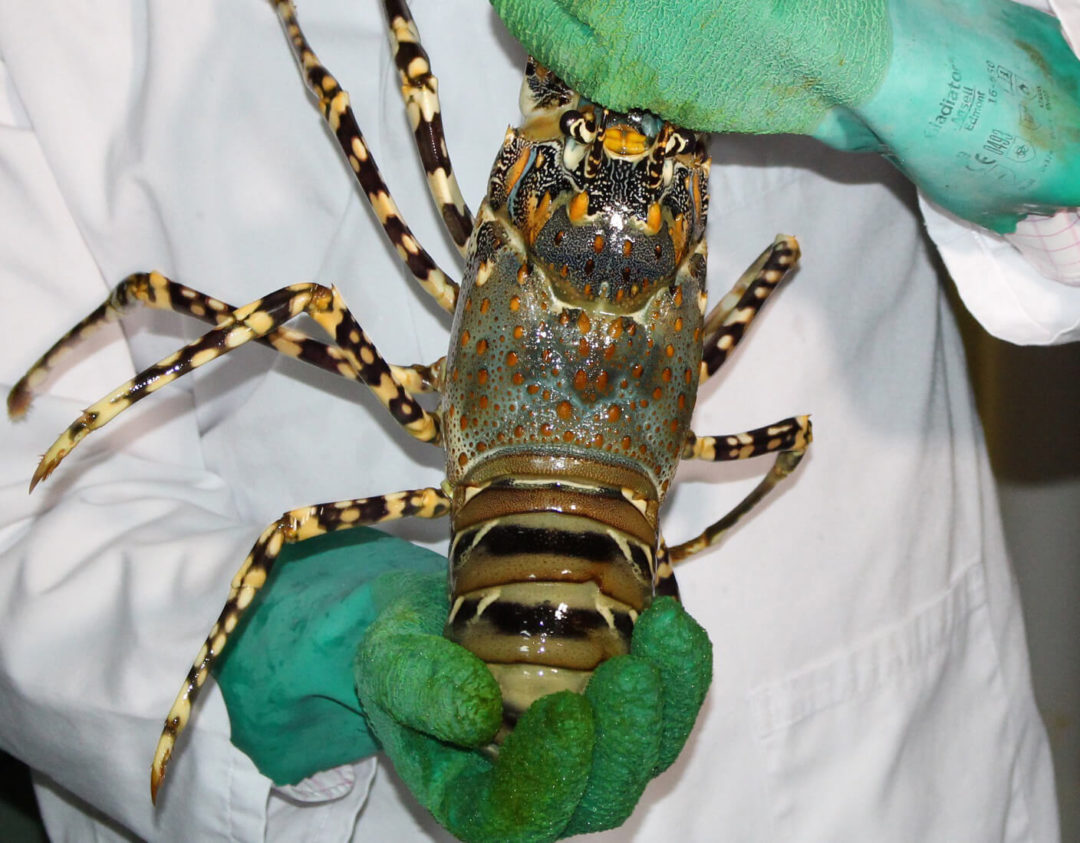
“We work on the Southern Rock Lobster and Eastern Rock Lobster, however our focus at present is the tropical lobster. This species has some favourable traits for aquaculture including the shortest larval duration of spiny lobster, three to four months, fast growth to a one kg market size in less than two years, and strong market demand.
We have been able to develop a commercial larval diet, this has been critical to the success of this program. Without the right diet, the animals wouldn’t thrive.
“Another key area that has led to the success that we have had with this program has been the development of water treatment protocols, with assistance from PFG Group Pty Ltd, that provide animals with oceanic quality water.”
As well as the perfect diet and water, the lobster culture tank is also of crucial importance.
“Engineering the perfect tank has been a large part of what we do.”
The tank must have the appropriate water flow dynamics, so there is interaction between the lobster larvae and their food. They literally have to bump into their food to find and eat it.
“We’ve managed to develop a tank that will accommodate large numbers of animals that will provide the ideal conditions to make larval culture of lobster a viable proposition.”
And while the initial goal of the ARC Hub has been achieved, the next challenge is developing systems to grow lobster juveniles. The Hub team has secured a partner to build the world’s first lobster hatchery and develop a new industry.
“Going forward our project will have a diverse focus that will include diet development for juveniles and adults, maximising juvenile lobster culture practices and examining the economics of lobster culture.
“Our aim is to develop lobster culture systems that will perform in an economical and sustainable way. We will investigate how current ideas on lobster aquaculture can be developed to produce this highly sought after product in a sustainable way,” Associate Professor Smith said.
There are plenty more discoveries to come.
This University of Tasmania research partners with the Australian Research Council, Tasmanian Government, UTAS Nexus Aquasciences, University of the Sunshine Coast, the University of Auckland, and Plastic Fabrications.
A Tasmanian firm with a world-class pedigree in the mariculture sector is partnering with the University of Tasmania to commercialise ground-breaking research into rock lobster production.
Despite the high value of rock lobsters, until now the long and complex life cycle has made it impossible to produce the species in a commercially scalable hatchery.
The world-first research at the University of Tasmania’s Institute for Marine and Antarctic Studies (IMAS) - supported by the ARC Research Hub for Commercial Development of Rock Lobster Culture Systems - stands ready to change that.
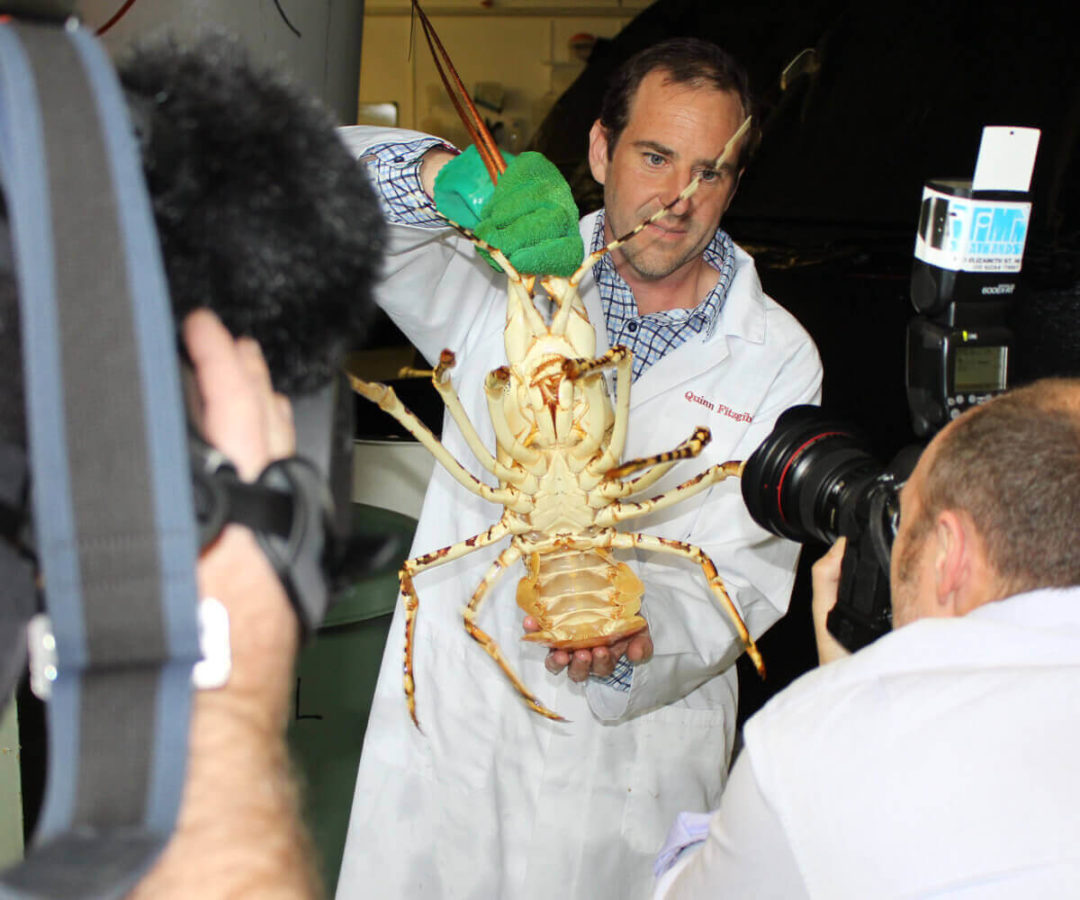
Now, PFG Group Pty Ltd (PFG) – a Tasmanian advanced manufacturer, whose operation includes the manufacture of high-end mariculture facilities and equipment - has invested in a University spin-out company to secure the Australian licencing rights to the research.
University Deputy Vice-Chancellor (Research) Professor Brigid Heywood (pictured, left, centre) said: “It is emblematic for us that a Tasmanian firm, led by a University alumnus (PFG CEO Michael Sylvester) has agreed to help us realise what has been 15 plus years in the making.
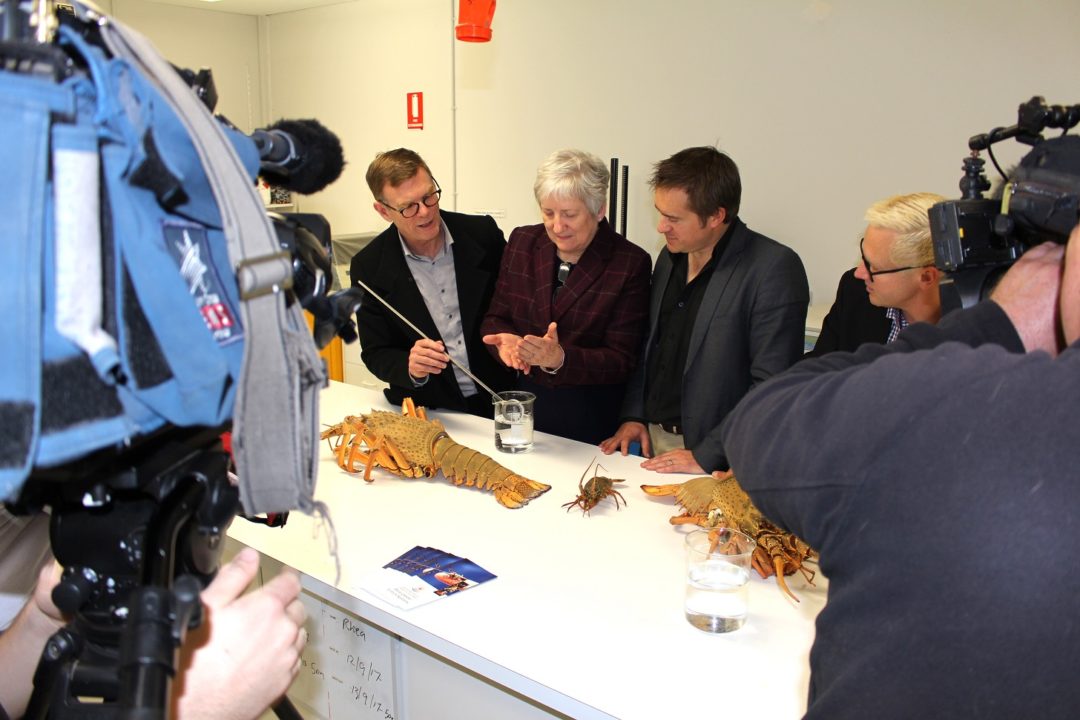
“We are passionate about the role of research and innovation in providing a platform for economic renewal and the creation of entirely new economic sectors. This is a very fine example of that in action.
“This partnership paves the way for Tasmania to become the birthplace of a global industry for rock lobster aquaculture.”
In the next two years, scientists working at IMAS Taroona will complete the final two years’ work of the Australian Research Council-backed hub, focusing on the optimisation of technology that will underpin commercial production. PFG’s commitment includes the construction in Tasmania of the world’s first commercial scale hatchery.
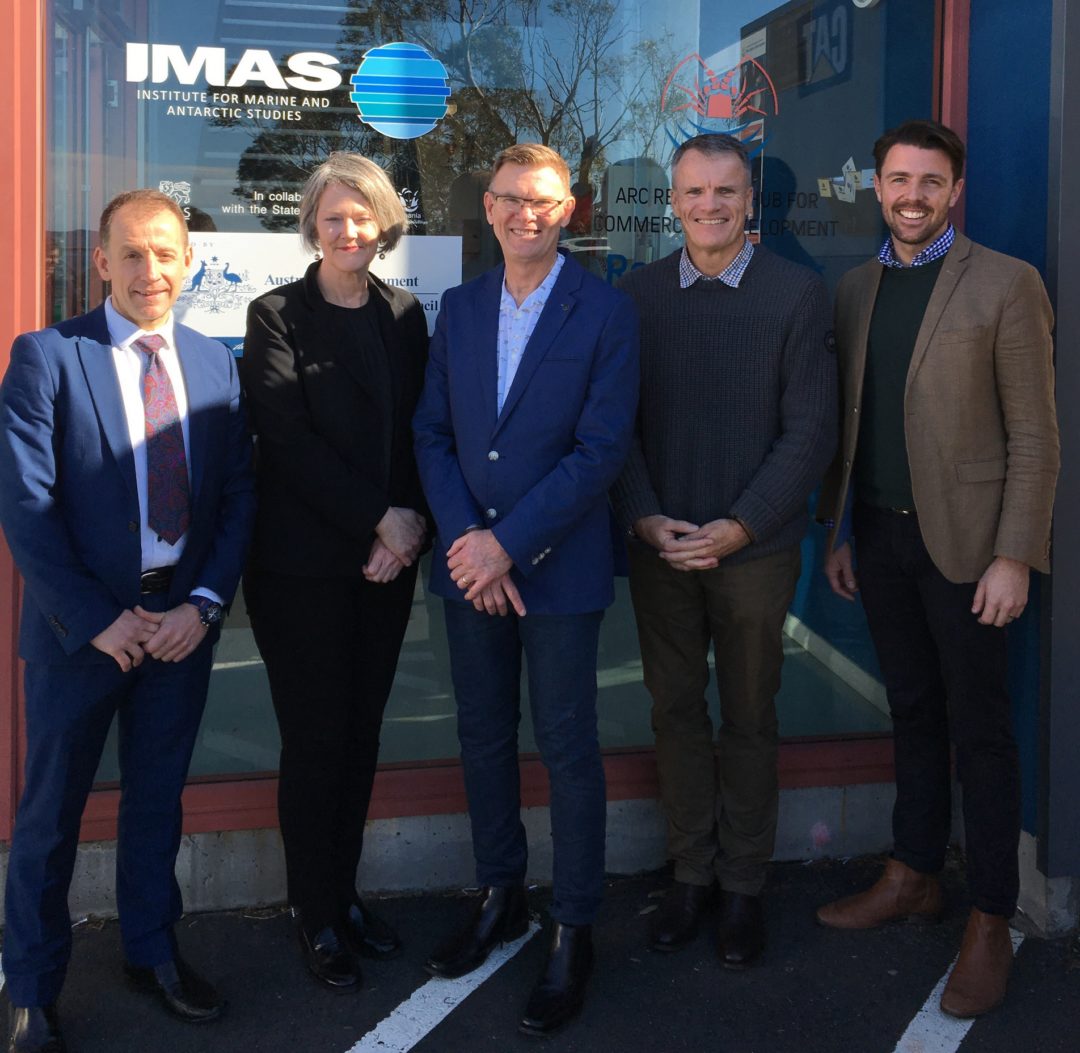
Mr Sylvester (pictured, above, 3rd from left) said the partnership would lead to further opportunities for its existing portfolio of world-class products and services, while opening entirely new export markets.
“This arrangement brings together Government, academia and industry in partnership that will create direct employment within Tasmania, and allows us to export our intellectual property to the world,” he said.
“We already have significant technical capacity in the field and this research platform allows us to leverage that capacity in new and exciting ways.”
PFG anticipates the first commercial production will start at the new hatchery facility within four years.
After 17 years researchers from the Institute for Marine and Antarctic Studies (IMAS) based at the University’s Taroona laboratories have developed the solution to a problem that scientists around the globe had been trying to solve for decades.
Led by Associate Professor Greg Smith, the team at theARC Research Hub for Commercial Development of Rock Lobster Culture Systems is the first in the world to develop scalable methods to rear rock lobsters through their larval phase in a commercial hatchery setting. This provides immense opportunities to establish a sustainable lobster aquaculture industry.
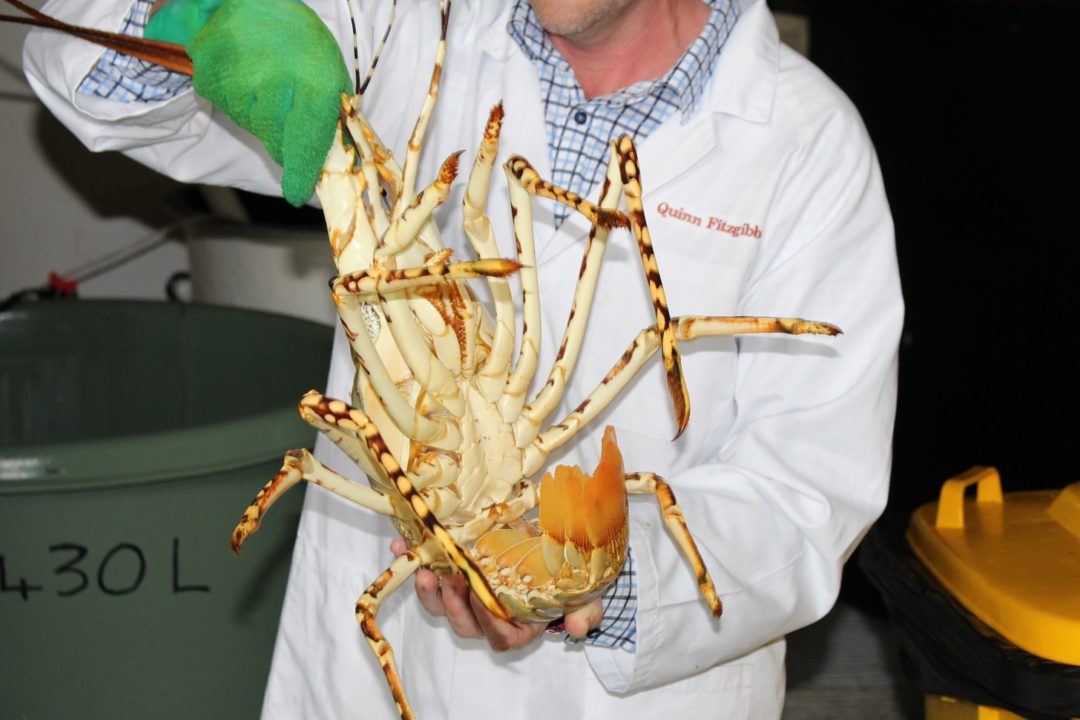
Despite their high value, until now the long and complex lifecycle of rock lobsters (which are also known as spiny lobsters) had made it impossible for the production of large numbers of juvenile lobster required to establish commercial farming.
Depending on the species, rock lobsters can take between six and 24 months to successfully complete their complex larval phase, containing up to 11 stages.
For most of this time the larvae, known as phyllosoma, are very different to mature lobsters, as they are flat and transparent with a shape reminiscent of a spider and require clean oceanic water.
While scientists had previously been able to rear small numbers of animals from eggs through to the juvenile stage, never before had they managed to do it on a mass scale, an advance that could form the basis for commercial aquaculture.
The breakthrough made by the team at the ARC Research Hub was not the result of a single discovery or invention, but rather a long series of incremental advances as successive challenges were overcome, including the design of the larval-rearing tanks, development of water treatment techniques and creation of specialised diets.
The IMAS research laboratory now houses 10,000 litre tanks, each capable of rearing thousands of juvenile lobsters from eggs.
Associate Professor Smith, who first started working on the lobster aquaculture challenge as an Honours student, said it had been a long but rewarding road.
This world-leading science has significantly reduced disease, shortened larval duration and overcome many long standing density and metamorphosis challenges.
“While further research will optimise the process and allow us to scale-up, we have demonstrated our hatchery process at our research facility in Taroona in mass-rearing tanks which can annually produce tens of thousands of juveniles suitable for stocking commercial grow-out facilities.”
The technology is particularly advanced with the tropical rock lobster species, Panulirus ornatus, which is a faster growing species than the eastern and southern rock lobster, which are also grown and studied at the IMAS facility.
The Deputy Vice-Chancellor (Research), Professor Brigid Heywood, said the breakthrough has created exciting commercial opportunities for Australian companies interested in establishing rock lobster aquaculture ventures.
“We are now in discussions with potential partners around the opportunity to collaborate with the University to scale-up and commercialise the research.
“Importantly, it also opens the door for other species that can benefit from our advances in hatchery systems design, nutrition and disease control.”
In addition to funding from the Australian Research Council the lobster research has also received long-standing support from the Tasmanian Government and has been assisted by early funding support from the Fisheries Research and Development Corporation.
Lobsters are a hugely popular food. But animals from the same brood stock grow at different rates, which can make aquaculture difficult. Audrey is investigating which animals grow faster, and why.